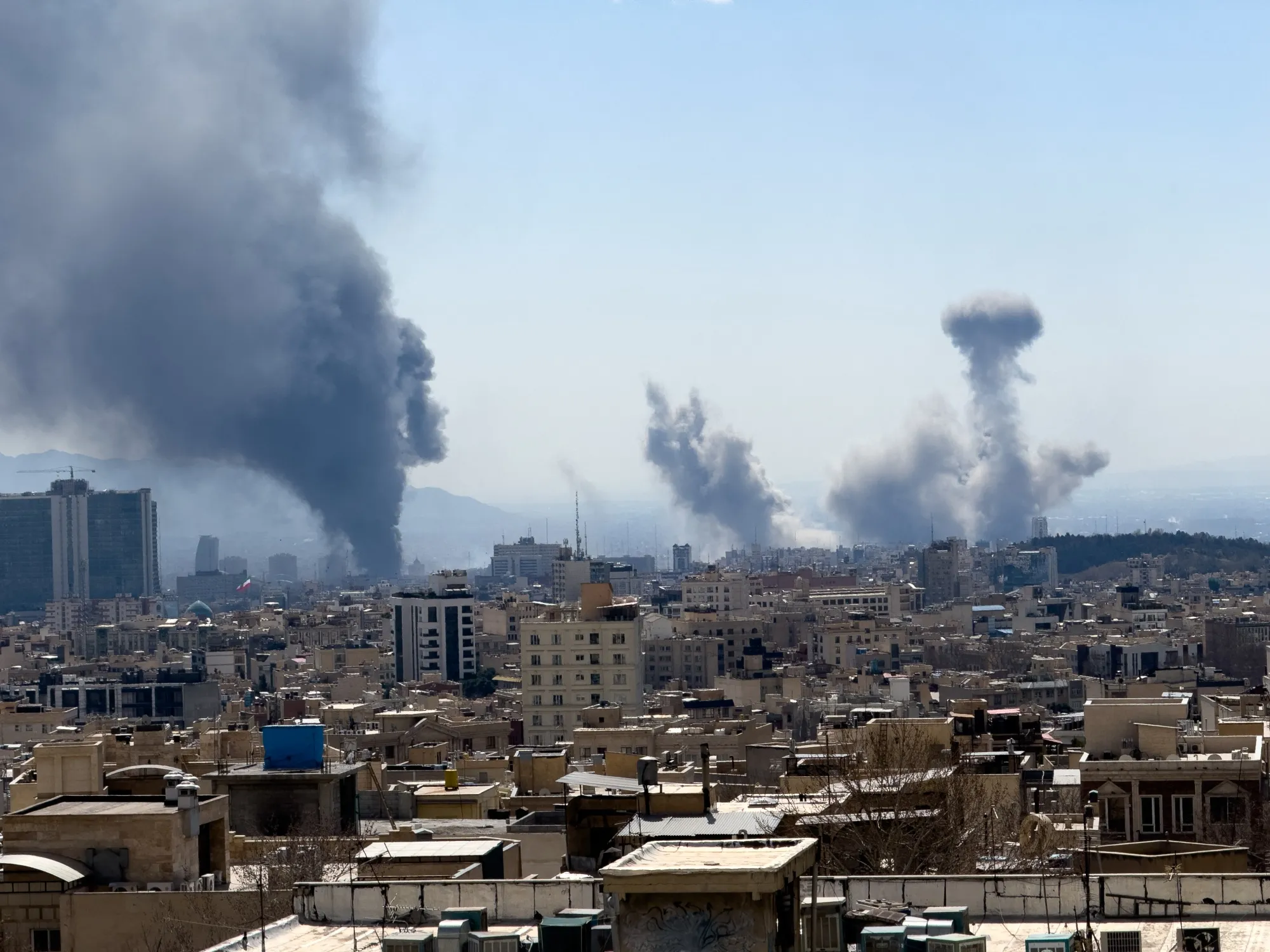
Maritime traffic through the Strait of Hormuz has nearly come to a standstill, with no oil shipments recorded in the past 24 hours as the escalating war in the Middle East disrupts one of the world’s most critical energy chokepoints.
A review of shipping signals shows that just two commercial vessels have passed through in the last 24 hours, the Joint Maritime Information Center said in a note on Friday. Both were cargo ships—not oil tankers—according to the multinational naval advisory group that monitors maritime security across the Middle East.
The intensifying conflict in the region has forced dozens of fully loaded oil and gas tankers to remain anchored inside the Persian Gulf, effectively choking off supplies bound for key markets in Asia and Europe. With attacks on vessels in and around the strait still occurring at an alarming pace, the route has become too dangerous for energy tankers—and their multimillion-dollar cargoes—to risk the journey.
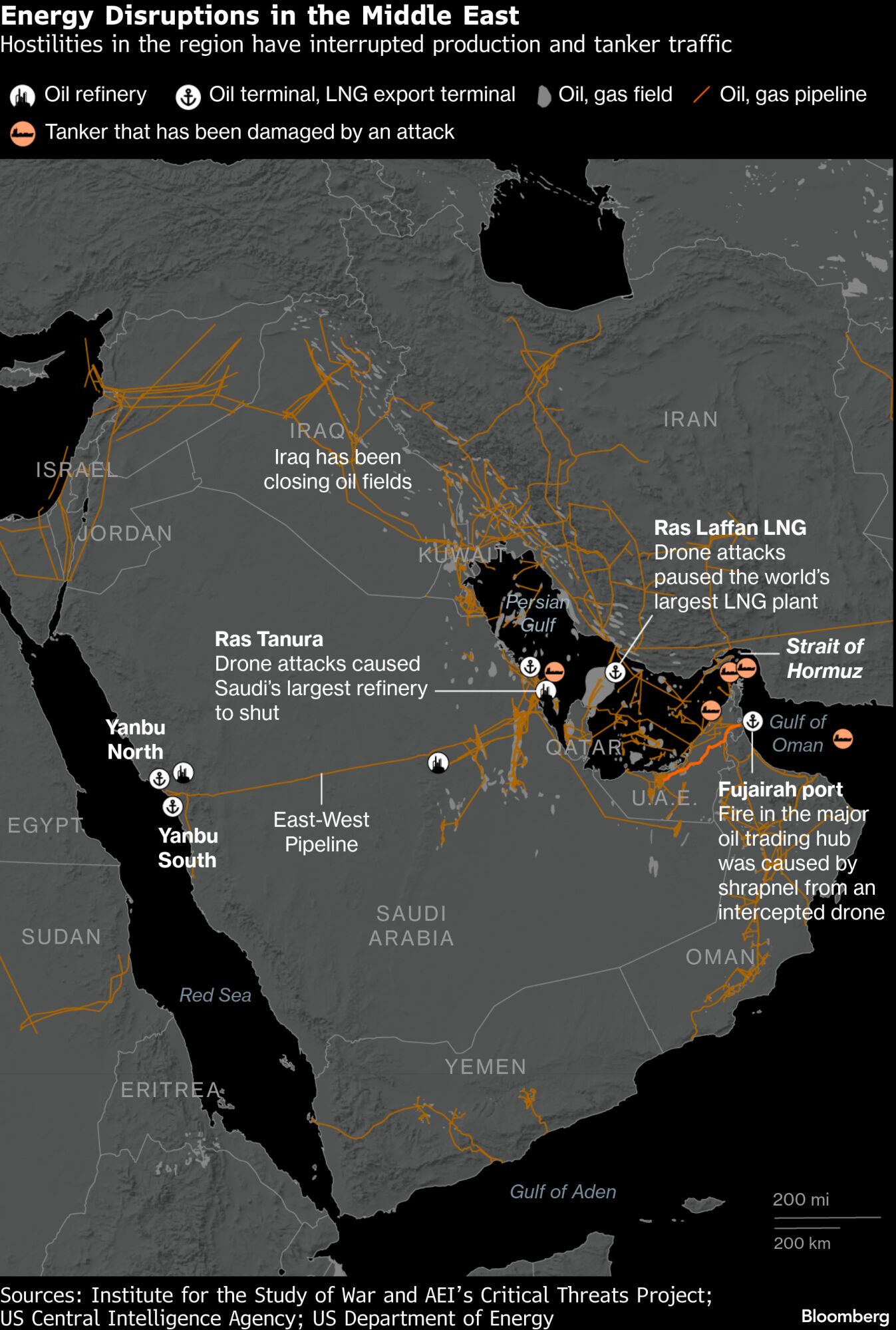
Washington moved this week to offer insurance backstops and naval escorts after global insurers began pulling back from war-risk coverage. But for many shipowners, the assurances have yet to ease fears about sending vessels through the increasingly dangerous waters.
"This represents a near-total temporary pause in routine commercial traffic," the JMIC said, noting that just one inbound and one outbound vessel crossed the strait on March 4. The count includes only ships with their transponders switched on, meaning any vessels sailing without signals may not be captured. Compounding the risk, sophisticated interference with global positioning system signals has been reported in the area, disrupting both navigation and communications.
Two vessels — MSC Grace and Sonangol Namibe — were reportedly caught up in separate incidents in the Arabian Gulf and near Iraq. Meanwhile, the bulk carrier Iron Maiden managed to exit the strait while broadcasting “CHINA OWNER,” a signal widely seen as an attempt to deter attacks and secure safe passage through the tense waterway. In another case, the LPG tanker Bogazici transmitted a message identifying itself as a Muslim-owned, Turkish-operated vessel — a striking example of how ships are increasingly using public signals in hopes of avoiding trouble.
Photograph: Cargo ships in the Strait of Hormuz in February 2026; photo credit: Giuseppe Cacace/AFP/Getty Images