A 62-year-old home movie may finally crack open the JFK assassination—raising the explosive possibility that a second gunman was hiding on the grassy knoll that fateful day.
The grainy 8mm film was shot by Dallas air conditioner repairman Orville Nix as gunfire tore through Dealey Plaza on Nov. 22, 1963. It hasn’t been seen since 1978, when it was sent to a Los Angeles firm for analysis—then quietly slipped into federal hands, even as officials now insist they don’t have it.
Nix died in 1972, and the legal fight to reclaim his film was later taken up by his granddaughter, who inherited the battle from her late father. She believes the footage could be worth more than $900 million—and may hold the key to exposing one of the greatest cover-ups in modern history.
Now, a federal judge has ruled that the fight over the film can move forward—raising the possibility that the long-hidden footage could finally see the light of day.
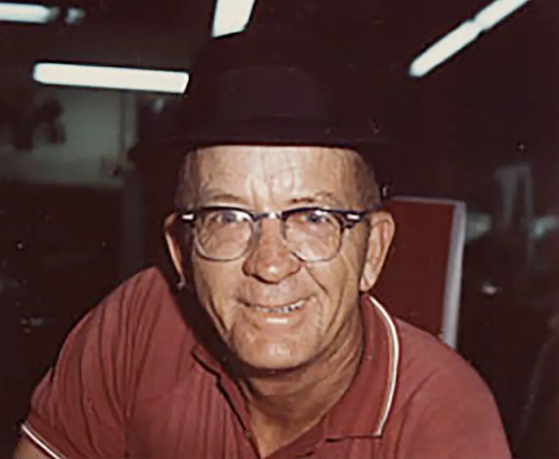
The granddaughter of Orville Nix—the man who captured rare 8mm footage of the Kennedy assassination—is now locked in a courtroom battle, pressing the government to release long-withheld records and compensate her for a film far less known than the iconic Zapruder footage, yet potentially just as explosive. Orville Nix, Sr.
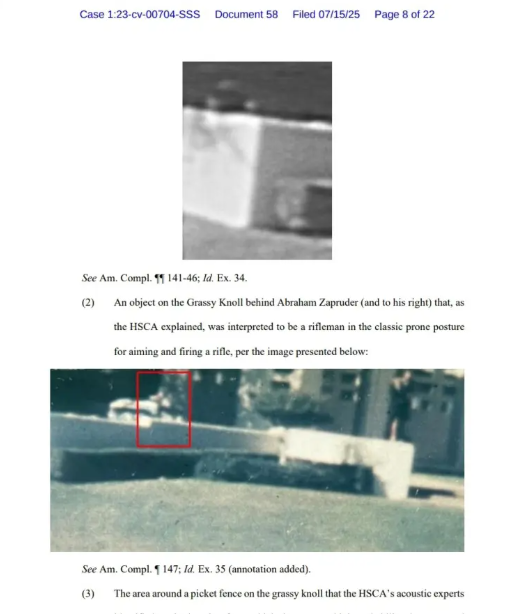
Unlike the famous Zapruder film, which captured the instant President Kennedy was struck in the head, Nix’s camera was trained on the notorious grassy knoll—the very spot where many witnesses believed the shots came from. For decades, conspiracy theorists have argued that a second gunman was hiding behind a fence on the knoll.
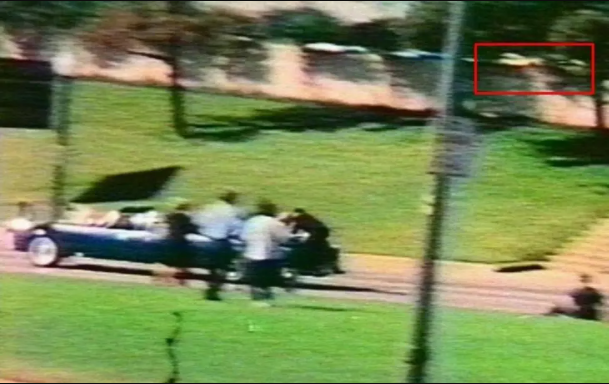
The Nix film shows first lady Jackie Kennedy scrambling onto the back of the presidential limousine moments after her husband was shot—while also capturing a clear view of the fence.
The film could uncover evidence that Lee Harvey Oswald did not act alone, thanks to advances in optical technology and artificial intelligence, according to Scott Watnik of Wilk Auslander LLP, an attorney for Nix’s granddaughter, Linda Gayle Nix Jackson.
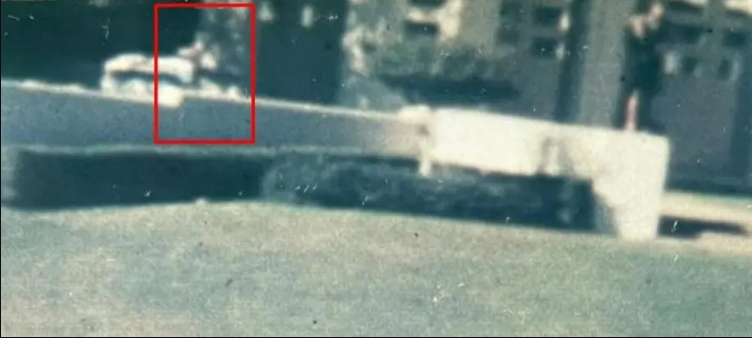
Orville Nix’s film captures the infamous “grassy knoll,” long cited by Kennedy conspiracy theorists as the possible hideout of a second gunman. Courtesy Nix family
"It’s really the only one that is known to have captured the grassy knoll area of Dealey Plaza right as the assassination occurs," Watnik told The Post, noting that it could lend weight to a 1978 House Select Committee on Assassinations report, which concluded that Kennedy “was probably assassinated as a result of a conspiracy.” That panel had obtained the Nix film and played a pivotal role in the ongoing legal battle to reclaim it.
“If we subjected the camera-original film to optics technology of 2026, we can certainly capture details in the film that we never could have captured when . . . the committee had the film in 1978,” he said.
Family lawyers say that new technology could enable far more detailed analysis, potentially revealing exactly what happened that day. Orville Nix, Sr.
In its own 1980 review, the FBI found flaws in that report, which had relied on acoustic analysis in an attempt to pinpoint the location of a possible second shooter.
Over the past six decades, the Nix film has passed through the hands of the FBI, the news agency United Press International, Congress, and a private firm in Los Angeles called The Aerospace Corporation, which analyzed it and says it returned the footage to the National Archives.
In 1988, the National Archives said it held only a copy of the film. Now, a Jan. 15 order from Court of Federal Claims Judge Stephen Schwartz opens the door for lawyers to press the government to disclose details about how the footage has been handled.
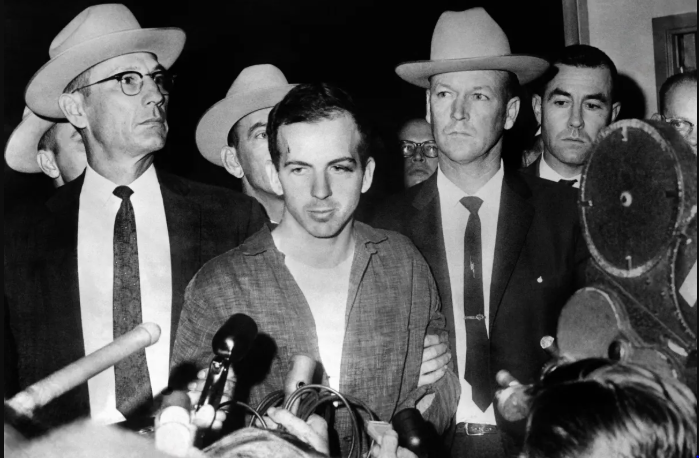
The Warren Commission concluded that Lee Harvey Oswald acted alone in assassinating President Kennedy. AFP via Getty Images
The family’s case hinges on the Fifth Amendment, which guarantees that the government cannot seize private property without providing “just compensation.”
However, the 1992 JFK Records Act gave the government ownership of evidence related to the assassination, while establishing a process for making records available to the public.
Abraham Zapruder himself can actually be seen in the Nix film. Orville Nix
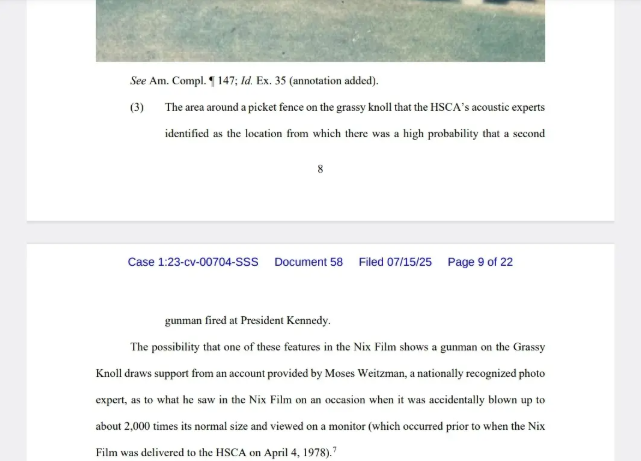
The grassy knoll captured in the film lies at the heart of the infamous “second gunman” theory. Orville Nix
But the family’s staggering monetary claim could face hurdles—especially considering that an arbitration panel valued the Nix film’s more famous counterpart, the 8mm footage shot by dressmaker Abraham Zapruder, at $16 million back in 1999, calling it “a unique historical item of unprecedented worth.”
Lawyers for Nix’s granddaughter point to that valuation as a benchmark for what her grandfather’s film might have been worth—but they are pushing for their client to receive a substantial sum of interest, given the government’s long-term possession.
“If one were to say this film is worth what that one is worth as of ’92, and you apply 32 years of compound interest at a quarterly compound basis, you start to get numbers in the many many hundred of millions,” Watnik said. One “preliminary estimate” his team reached was $930 million.
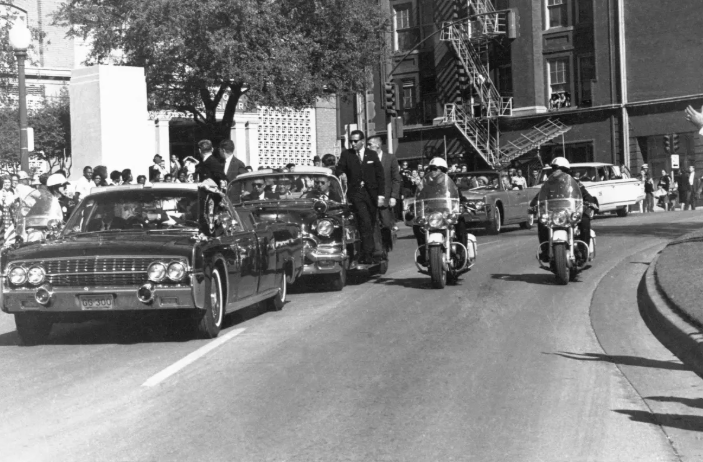
President Kennedy’s motorcade rolls through Dallas just moments before the assassination. Corbis via Getty Images
The fight isn’t just about securing money for Nix’s heirs—proceedings have also been slowed by the death of Nix’s son, Orville Nix Jr., in July.
Lawyers for Nix Jackson say they hope to leverage the court case—and a potential trial, if no settlement is reached—to compel the government to reveal new information about how and where it has stored materials, including fragments of JFK’s brain and recordings of Dallas police communications from the day of the assassination.
“This is evidence of a murder, after all—of our nation’s president,” Watnik said. “So it’s even more important that we know where these records are.” The Nix family’s lawyers aren’t taking the government’s responses at face value. Among the Kennedy records they say have gone “unlocated” over the years are the original supplementary autopsy report, up to three autopsy photos, and President Kennedy’s brain.
The National Archives and Records Administration declined to comment when asked for a statement.
The 1964 Warren Commission report concluded that Lee Harvey Oswald acted alone in assassinating President Kennedy from the Texas School Book Depository as the motorcade passed—but conspiracy theorists have long rejected its findings.