Former President Joe Biden’s decades-long political career has earned him the largest taxpayer-funded pension of any former U.S. president — a staggering $417,000 a year, according to experts, even exceeding the salary he made in the White House.
At 83, Biden was poised to pull in the eye-popping sum from two separate pension plans in his first year out of the White House, according to an analysis by Demian Brady, vice president of the National Taxpayer Union Foundation.
“It’s pretty unusual, historically unusual, to have such a large pension amount,” Brady told FaqInsurances.
"I would have to say that it’s the largest," the taxpayer advocate said, when asked how Biden’s pension stacks up against those of past presidents.
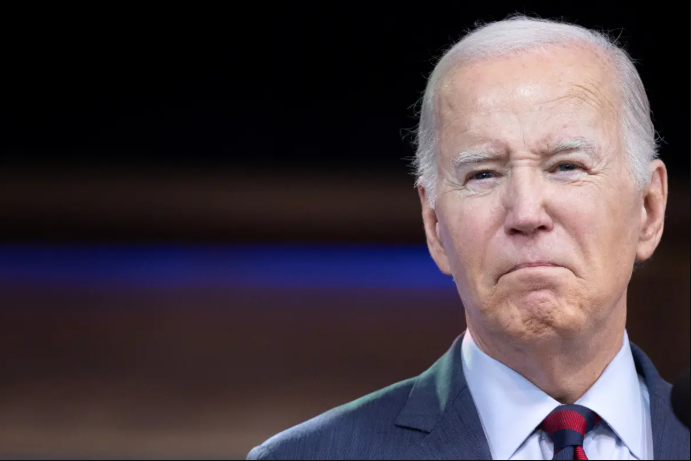
Former President Joe Biden now collects an annual pension that surpasses the salary he earned as commander in chief. REUTERS
The eye-popping estimated annual payout is twice what Biden’s former boss, Barack Obama, receives in retirement — and about $17,000 more than Biden’s own $400,000-a-year salary as president.
Brady said the eye-popping figure also stems from Biden’s “unique situation” — a career that spans the Senate, the vice presidency, and the presidency — allowing him to exploit a “loophole” that lets him draw from multiple taxpayer-backed retirement plans.
Biden — who once famously described himself as “one of the poorest members” of Congress — is now able to collect the lucrative payouts by tapping into benefits under the Former Presidents Act of 1958 while also drawing from the Civil Service Retirement System for former senators.
The annual payout under the CSRS pension plan is calculated using a formula that factors in Biden’s 44 years in the Senate and as vice president, along with his three highest-earning years during that long stretch.
"Biden’s starting pension could be as much as $166,374, including an $18,186 set aside in the program for the spousal portion of benefit," Brady said, noting that his estimate assumes Biden opted to maximize the value of his Senate pension.
The former president could have collected more than $254,000 a year from the CSRS, if not for a cap that limits payouts to 80% of his highest salary — $230,700 annually as vice president and president of the Senate.
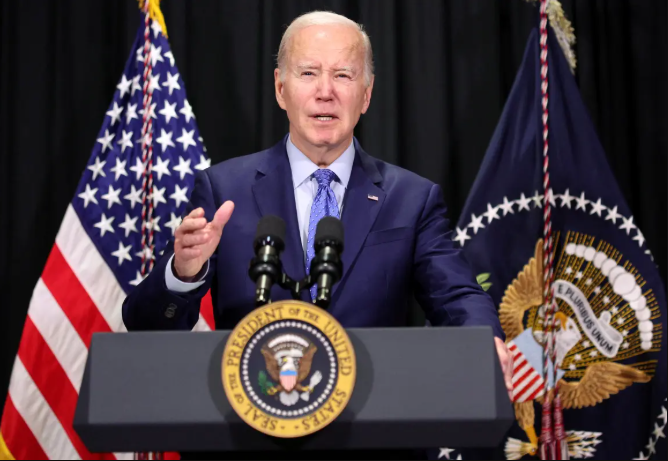
The former president is tapping into two separate taxpayer-funded pension funds at the same time. REUTERS
Biden, first elected to the Senate in 1972, joined before the retirement plan was adjusted, allowing earlier members like him to enjoy more generous benefits than newer senators.
In addition to his Senate and vice presidential benefits, Biden collects a quarter of a million dollars a year from his presidential pension.
Under the 1958 law, Biden’s presidential pension is required to match the salary of a Cabinet secretary, which currently stands at $250,600.
The law was passed amid public concern over former President Harry Truman’s supposed financial struggles after leaving office — though historians and experts now say Truman was actually a multimillionaire and far from destitute.
The FPA also set up a range of additional taxpayer-funded perks for former presidents, covering expenses for staff, office space, and equipment.
For fiscal year 2026, the General Services Administration has budgeted over $1.5 million for Biden — including $727,000 just for office space — more than any other former president.
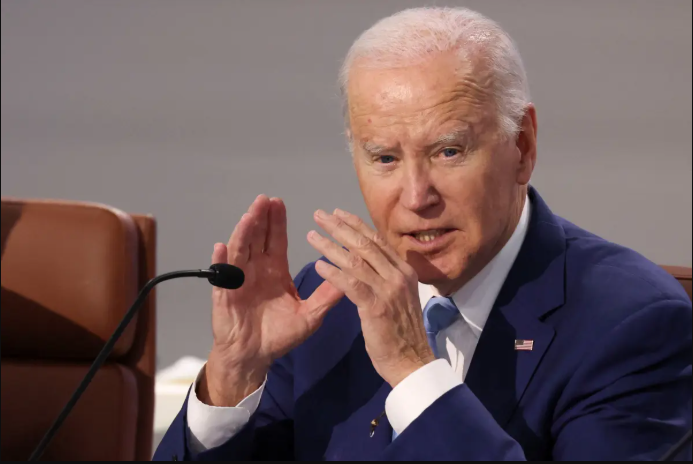
Biden also receives an additional $1.5 million in perks, including taxpayer-funded office space. REUTERS
“There’s no cap on the rent for that,” Brady said. “So it could be in a high-density area with high rent, and there is no limit on the amount of square footage that’s being rented and funded by taxpayers."
“It’s also provided for life.”
A spokesperson for Biden did not respond to FaqInsurances' request for comment.
Brady questioned whether younger former presidents like Obama should be allowed to charge taxpayers for office space that’s often used to write memoirs and land lucrative speaking deals.
He also argued that lawmakers should step in to prevent future former presidents from cashing in on the kind of taxpayer-funded windfall Biden is enjoying in retirement.
“Biden is making more in retirement than the current president gets,” he said. “It’s a very unique situation, but even though it is unique, it is one that’s ripe for reform going forward."
“Congress ought to look at that to prevent such an extravagant pension amount in the future.”
Last year, Sen. Joni Ernst (R-Iowa) introduced the Presidential Allowance Modernization Act, which would cap presidential pensions at $200,000 and reduce perks like office space, staff, and travel expenses.
An earlier version of the legislation passed Congress in 2016 but was vetoed by Obama just three months before leaving office — at a time when he stood to benefit from the very perks the bill sought to cut.
Concerns about taxpayer-funded pensions go beyond former politicians like Biden.
Under federal law, any member of Congress becomes eligible for an annual pension after just five years of service — a benefit that costs taxpayers roughly $38 million each year.
Rep. Marjorie Taylor Greene (R-Ga.), who took office on Jan. 3, 2021, raised eyebrows when she announced her final day as a congresswoman would be Jan. 5 — just enough time to meet the eligibility threshold for an $8,717-a-year pension.
Greene’s pension is modest compared to the estimated $107,860 per year that longtime Rep. Nancy Pelosi (D-Calif.) is set to receive when she leaves Congress in 2027 — yet over her lifetime, Greene could still collect more than $265,000 from the taxpayer-funded benefit.