
President Donald Trump vowed this weekend to put $2,000 directly into the hands of every American, drawn from what he claimed was tariff revenue.
"A dividend of at least $2000 a person (not including high income people!) will be paid to everyone," the president shared on social media Sunday.
Just hours later, Treasury Secretary Scott Bessent cast doubt on the plan, warning that the promised $2,000 could simply be tax savings already built into Trump’s landmark domestic spending measure.
Bessent told ABC News’ This Week on Sunday that a tariff dividend could come "in lots of forms," adding that he hadn’t even spoken with Trump about the proposal.
The notion of a tariff dividend—reminiscent of the pandemic stimulus checks—has raised questions about who would be eligible and what to make of the administration’s confusing signals. Economists are already questioning whether there’s enough tariff revenue to make the payout a reality.
Here’s what you should know about the $2,000 tariff dividend plan—and who might actually get it.
Dividend: What it is and why it matters to you
Simply put, a ‘dividend’ is a payment to shareholders, taken from a company’s profits—but what does that mean for the average person?
In this scenario, a ‘dividend’ would mean payments to Americans, paid for by the revenue from Trump’s far-reaching tariffs.
This plan is reminiscent of the three pandemic-era stimulus checks, two signed by Trump, which provided up to $3,200 per tax filer and $2,500 per child, according to the Pandemic Response Accountability Committee, a watchdog set up by Congress.
Trump weighs in: What he’s said about the potential $2,000 tariff dividend
On Sunday morning, Trump announced the plan in a brief social media message, pointing to tariff revenue as the source.
"People that are against Tariffs are FOOLS! We are now the Richest, Most Respected Country In the World, With Almost No Inflation, and A Record Stock Market Price. 401k's are Highest EVER," the president wrote. "A dividend of at least $2000 a person (not including high income people!) will be paid to everyone."
The announcement left key questions unanswered, including who would get the money and how the plan would function.
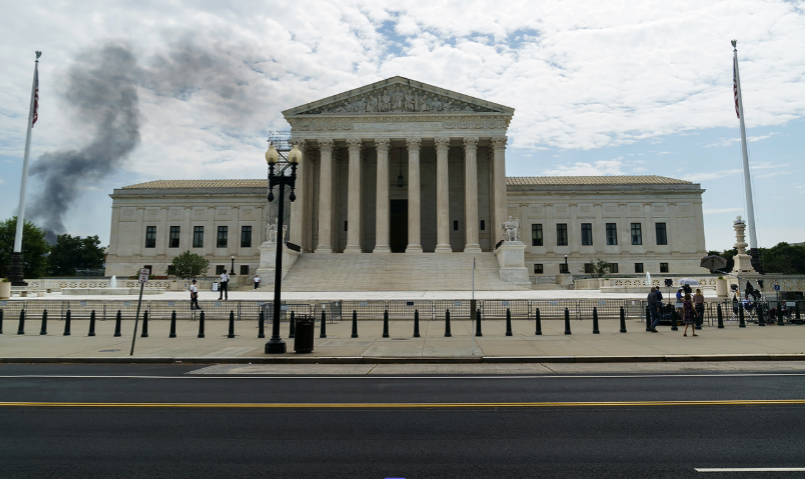
The United States Supreme Court building is seen as in Washington
$2,000 dividend: Who stands to actually receive it?
Who exactly would get the payout remains uncertain, but Trump has said it would not include "high-income people."
Trump’s pandemic stimulus checks gave full payments to individuals earning $75,000 or less and couples up to $150,000, with smaller payouts for those who earned more.
The Census Bureau found that the median American household earned $83,730 last year—raising questions about who might benefit from a $2,000 dividend.
Are the $2,000 dividend checks in jeopardy? Treasury Secretary Scott Bessent weighs in
Hours after Trump unveiled the plan, Bessent cast doubt on whether tariff-related dividend checks would actually happen.
On Sunday, Bessent hinted that the $2,000 dividend might not be new money at all, but rather tax cuts from Trump’s One Big Beautiful Bill signed on July 4.
"It could be just the tax decreases that we are seeing on the president's agenda. No tax on tips, no tax on overtime, no tax on Social Security, deductibility on auto loans. Those are substantial deductions that are being financed in the tax bill," Bessent told ABC News' "This Week" Sunday.
"The real goal of tariffs is to rebalance trade and make it more fair," Bessent added.
Trump and Bessent’s conflicting remarks arrive days after the Supreme Court debated whether a president has the constitutional power to impose tariffs on their own. Speaking for the administration, Solicitor General John Sauer minimized the revenue side, saying the tariffs don’t violate Congress’s taxing authority.
"The fact that [the tariffs] raise revenue is only incidental," Sauer told the justices.
$2,000 checks: Has the U.S. raised enough tariff revenue to make them a reality?
If Trump were to make the dividend payments available to anyone earning $100,000 or less, the policy could reach around 150 million Americans, totaling roughly $300 billion in payouts, said Erica York, a policy expert at the Tax Foundation, in a post on X.
By September 30, the U.S. had raked in $195 billion in tariff revenue, according to the Treasury Department.
Based on those numbers, the $300 billion price tag for the dividend checks would greatly exceed the tariff revenue currently available.
Even after factoring in revenue from Trump’s new tariffs and some negative budget impacts, York estimates net tariff revenue at only $90 billion—far short of the $300 billion needed for the proposed dividend checks.
The Committee for a Responsible Federal Budget noted that, depending on the Supreme Court’s decision on Trump’s tariff powers, the White House might have to repay tens of billions in revenue to importers who paid the taxes.
In theory, Trump could fund the $2,000 dividend with expected tariff revenue—projected at $3 trillion over the next decade—but doing so would add to the already massive federal debt, now topping $38 trillion, the Treasury Department says.


